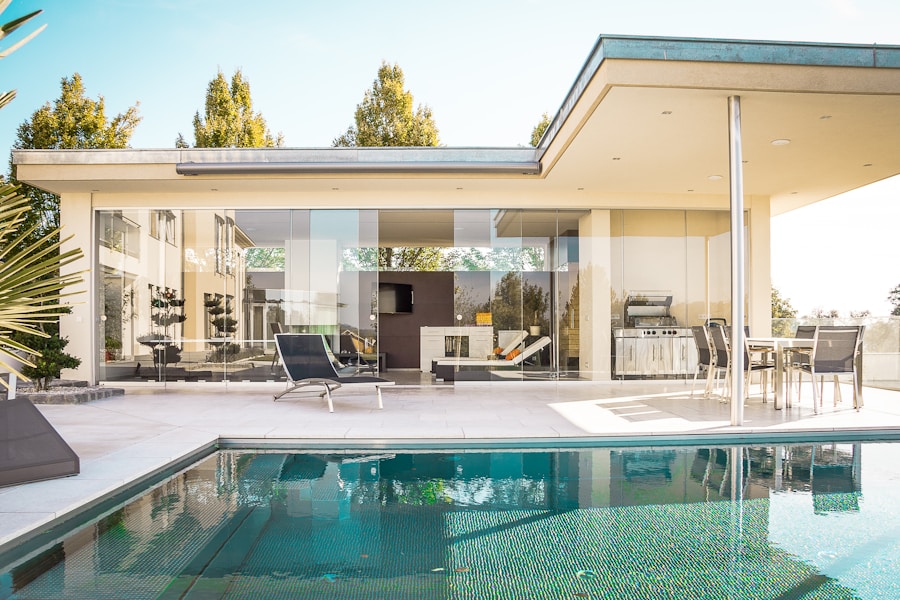
Building a house in Ghana from the UK or the USA is one of the most common dreams in the Ghanaian diaspora — and one of the most frequently derailed. Not because it is impossible, but because the people who fail almost always approach it the same way: they treat it like a local build managed from a distance, rather than what it actually is — a cross-border project that requires a completely different playbook.
This guide is for Ghanaians in the UK, USA, Canada, and anywhere abroad who want to build at home — sensibly, safely, and without losing their savings to contractors who disappear, materials that never arrive, or land they never truly owned.
Exchange rates used in this guide (April 2026): £1 GBP = approximately GHS 14.97 | $1 USD = approximately GHS 11.00. Rates fluctuate — always check the live rate before transferring funds.
Why Diaspora Builds Go Wrong
Before the practical steps, you need to understand the failure patterns. The same four problems appear again and again in diaspora build stories, whether the builder is in London, New York, or Toronto.
Contractor abandonment: A contractor takes a substantial upfront payment, starts work, and then slows down, disappears, or stops entirely — often because they have taken deposits from multiple clients simultaneously. Without someone on the ground to hold them accountable daily, you have no leverage.
Budget haemorrhage: Construction costs in Ghana are not static. Cement, steel, and sand prices shift month to month. Without a locked bill of quantities and a professional site supervisor, costs expand to fill whatever budget you are willing to send. Every transfer from abroad is seen as evidence that more is available.
Family supervision: Delegating to a trusted family member or friend in Ghana is the single most common mistake diaspora builders make. Even with the best intentions, a relative without construction knowledge cannot assess whether plastering is done correctly, whether steel coverage is adequate, or whether the billed materials actually arrived on site. Love is not a substitute for professional oversight.
Land disputes: Ghana has approximately 60,000 active land-related court cases at any given time. Diaspora buyers — operating remotely, trusting sellers they cannot verify, and unfamiliar with the complexity of customary land tenure — are disproportionately affected. Buying land without a lawyer and a Lands Commission search is the most expensive mistake you can make.
Step 1: Get Your Finances Right Before You Start
Building in Ghana from abroad is genuinely more affordable than building from savings in Ghana — the exchange rate is your structural advantage. But only if you plan correctly.
What does a typical build cost in GBP and USD?
Using current 2026 construction costs and exchange rates:
House Size
Standard Finish (GHS)
In GBP (£1 = GHS 14.97)
In USD ($1 = GHS 11)
2 bedroom
GHS 380,000 – 550,000
£25,400 – £36,700
$34,500 – $50,000
3 bedroom
GHS 600,000 – 900,000
£40,100 – £60,100
$54,500 – $81,800
4 bedroom
GHS 900,000 – 1,400,000
£60,100 – £93,500
$81,800 – $127,300
5 bedroom
GHS 1,300,000 – 2,200,000
£86,800 – £146,900
$118,200 – $200,000
These figures cover construction only — foundation to handover. Add 15–20% for land registration, building permit, professional fees, site security, utility connections, and a contingency fund.
Never send your entire budget at once
This is not negotiable. Release funds in phase-linked tranches tied to verified milestones. A professional site supervisor signs off that Phase 1 is complete before you release Phase 2 funds. No milestone, no transfer. This single discipline prevents the majority of diaspora budget disasters.
A practical tranche structure for a 3-bedroom build:
- Tranche 1 (20%): Released on confirmed land documentation, approved drawings, and permit application submitted
- Tranche 2 (25%): Released on foundation completion — verified by site supervisor photos and video walkthrough
- Tranche 3 (25%): Released on superstructure completion — walls up, ring beam poured, roof structure complete
- Tranche 4 (20%): Released on roof covering complete and building watertight
- Tranche 5 (10%): Released on finishing completion — tiles, windows, paint, fittings installed and snagged
Step 2: How to Send Money to Ghana Efficiently
Your choice of remittance service has a direct impact on how much of your money actually reaches Ghana. Bank-to-bank international transfers are consistently the most expensive option. Specialist transfer services offer significantly better rates and lower fees for the amounts involved in construction.
Best options for large construction transfers (2026)
Service
Best for
Typical rate (GBP)
Fee structure
Wise (formerly TransferWise)
Large transfers, transparency
Close to mid-market
Small % fee, no hidden margin
WorldRemit
Speed, mobile wallet delivery
Competitive
Fixed fee per transfer
Revolut
Regular transfers, app-based
Mid-market on weekdays
Plan-dependent limits
Remitly
First-time senders, promotions
Competitive with new-user offers
Tiered by speed
High street bank
Avoid for large amounts
2–4% below mid-market
High fixed fee + poor rate
For large one-off construction tranches (£5,000+), Wise consistently offers the best combination of rate and transparency. For the UK specifically, £6,000 sent via Wise currently converts to approximately GHS 86,000 — compared to significantly less via a high-street bank once their margin and fees are applied.
Receiving money in Ghana
The safest and most traceable method for construction funds is direct transfer to a Ghanaian bank account held in the name of your registered contractor or, better still, a dedicated project account in your own name at a Ghanaian bank. GCB Bank, Ecobank, Absa Ghana, and Fidelity Bank all offer accounts that can receive international transfers. Mobile money (MTN MoMo, AirtelTigo Money) works well for smaller milestone payments to artisans but has transaction limits that make it impractical for large construction tranches.
Never send construction funds to a personal mobile money account you do not control. Once the money leaves your transfer service, you have no recourse if it is misappropriated.
Step 3: Secure Your Land — The Right Way
Land acquisition is where diaspora buyers lose the most money. Ghana’s land tenure system has multiple overlapping categories — state land, vested land, customary land, and private freehold — and disputes between competing claimants are extremely common. Distance makes you particularly vulnerable.
Never buy land without these three things
1. A licensed Ghanaian solicitor: Not a family friend who knows someone at the Lands Commission. A licensed solicitor with demonstrable real estate experience. They will conduct the searches, draft your sale and purchase agreement, and advise you on the quality of the title being offered. Budget GHS 5,000–15,000 for legal fees on a land transaction — it is the best money you will spend.
2. A Lands Commission search: Before any money changes hands, your solicitor must conduct a formal search at the Lands Commission to verify that the land is not already titled to another person, not under encumbrance, and not subject to active litigation. This search costs a few hundred cedis and can be done without you being physically present.
3. A licensed surveyor’s site plan: Your land must be pegged by a licensed surveyor and a site plan produced that accurately reflects the boundaries. Boundary disputes between neighbours are one of the most common sources of construction delay and legal cost in Ghana.
Land prices for diaspora buyers (2026)
Here is a realistic land cost reference by area, using current 2026 market data:
Area
Price per plot (GHS)
In GBP
In USD
East Legon, Airport Residential
GHS 2,500,000 – 5,500,000+
£167,000+
$227,000+
Spintex, Adenta, Ashaley Botwe
GHS 300,000 – 850,000
£20,000 – £56,800
$27,300 – $77,300
East Legon Hills, Oyarifa, Ashongman
GHS 150,000 – 400,000
£10,000 – £26,700
$13,600 – $36,400
Kasoa, Pokuase, Amasaman
GHS 60,000 – 200,000
£4,000 – £13,400
$5,500 – $18,200
Kumasi (all areas)
GHS 50,000 – 400,000
£3,300 – £26,700
$4,500 – $36,400
For diaspora buyers focused on value-for-money without sacrificing accessibility, the East Legon Hills–Oyarifa–Ashongman corridor currently offers the best combination of plot size, legal clarity, and proximity to Accra infrastructure. Kasoa offers the lowest entry price but requires more due diligence on title quality and infrastructure readiness.
Step 4: Assemble Your Professional Team Before You Transfer a Single Penny
The most common diaspora build mistake — after bad land — is starting construction before the professional team is in place. The team is not optional. It is the project.
The five professionals you cannot build without
1. Licensed architect: Produces your approved drawings, manages the permit application, and is your first line of design defence. Do not use drawings produced by an unlicensed draftsman — they cannot be signed off for a building permit. Professional fees typically run 5–8% of construction cost for a residential project.
2. Structural engineer: Designs your foundations, columns, and beams for the specific soil conditions on your site. Soil conditions in Ghana vary enormously — a waterlogged site in low-lying Accra requires a completely different foundation to a laterite site in Kumasi. Fees typically run 2–4% of structural works cost.
3. Quantity surveyor (QS): This is the professional most diaspora builders skip — and the one they most regret skipping. The QS produces your bill of quantities, monitors costs against the budget throughout the build, certifies contractor payment claims, and alerts you to cost overruns before they become catastrophic. For a diaspora client who cannot be on site, the QS is your financial eyes. Budget GHS 15,000–40,000 for QS services on a 3–4 bedroom project.
4. Site supervisor / clerk of works: A full-time, qualified person on your site every day. Not a contractor’s employee — an independent professional whose loyalty is entirely to you. They check quality, verify material deliveries, report daily to you via WhatsApp or video call, and sign off each milestone before you release the next payment tranche. This role costs GHS 3,000–7,000 per month and is the single most important investment a diaspora builder can make.
5. Solicitor: Already mentioned for land — but they remain engaged throughout the project for any contract disputes, contractor agreements, and the final title registration of the completed building.
Step 5: Managing Your Build Remotely
Distance is manageable — but only with the right systems. These are the non-negotiable practices of every successful diaspora build.
Daily communication protocol
Your site supervisor sends you a daily WhatsApp update that includes: a brief written summary of work completed that day, a minimum of 5–10 photos showing active work, key materials used, and any issues encountered, and a weekly short video walkthrough of the entire site. This is not optional or occasional — it is a condition of employment. A site supervisor who resists this discipline is telling you something important.
Video call site inspections
At every major milestone — foundation poured, walls at ring beam level, roof structure complete, plastering done, tiling laid — conduct a live video walkthrough with your site supervisor. Walk them to every corner, every column, every bathroom. Ask questions. This call takes 30 minutes and replaces the need for a site visit.
Material delivery verification
Every significant material delivery — cement batches, iron rod deliveries, roofing sheets — must be photographed and counted by your site supervisor before signing any delivery receipt. Materials disappear from unmonitored sites with alarming regularity. Your supervisor should send photos of delivered materials alongside the delivery waybill.
Milestone-gated payment releases
Refer to the tranche structure in Step 1. Never release the next tranche until the previous milestone has been independently verified. Your QS signs off on costs; your site supervisor signs off on quality and completion. Both must confirm before money moves.
Visit schedule
Plan a minimum of two site visits for a standard residential build: once at the structural completion stage (walls up, roof on) and once at the end of the finishing phase before final handover. If you can manage three visits, add a foundation inspection visit. Each visit should last at least two to three days to allow for thorough inspection, supplier verification, and contractor face-to-face meetings.
Step 6: The Building Permit — Do Not Skip This
Building without a permit in Ghana is illegal and carries severe consequences — stop-work orders, demolition orders, and fines. More practically, an unpermitted building cannot be insured, cannot be mortgaged, and is extremely difficult to sell.
Your architect manages the permit application. The key documents required include:
- Completed application form from your local MMDA (Metropolitan, Municipal, or District Assembly)
- Four copies of architectural drawings signed by a licensed architect
- Four copies of structural drawings signed by a licensed engineer
- Land title or indenture
- Site plan endorsed by a licensed surveyor
- Land search certificate from the Lands Commission
Processing time is typically 4–12 weeks in Accra and Tema. Do not allow your contractor to begin any construction before the permit is issued. The permit must be displayed on site throughout construction. A permit is valid for five years — apply for an extension if your build runs longer.
Step 7: A Realistic Timeline for a Diaspora Build
Diaspora builds take longer than local builds. This is a fact, not a criticism. Factor it into your planning.
Phase
Typical Duration
Notes
Land acquisition and legal verification
1–3 months
Longer if title issues need resolving
Architectural drawings and permit application
6–10 weeks
Permit processing adds 4–12 weeks on top
Foundation and substructure
4–8 weeks
Depends on soil conditions and weather
Superstructure (walls, columns, ring beam)
8–16 weeks
Avoid rainy season — April–June, Sept–Oct
Roof structure and covering
3–5 weeks
Get building watertight before rains
Rough-in services (electrical and plumbing)
2–4 weeks
Must happen before plastering
Plastering and screeds
4–6 weeks
Allow full cure time — do not rush
Finishing (tiling, windows, kitchen, painting)
8–16 weeks
Most likely phase for delays and cost overruns
Total (well-managed project)
12–20 months
From permit to handover
A poorly managed diaspora build with funding gaps, contractor issues, or material delays can easily run to 3–5 years. The difference between 18 months and 5 years is almost always professional oversight and consistent funding discipline.
Step 8: Protecting Yourself from the Most Common Scams
Diaspora builders are specifically targeted by a set of well-worn scams. Knowing them in advance is your best protection.
The materials inflation scam: Your contractor tells you that cement prices have risen dramatically and requests additional funds. Sometimes true, often inflated. Your QS should be tracking actual market prices — this is exactly why they exist. Always verify price claims independently before releasing additional funds.
The ghost worker scam: You are billed for 20 workers on site. Your supervisor’s photo shows 8. Labour billing fraud is endemic on unsupervised sites. Your site supervisor’s daily headcount is your audit trail.
The foundation deepening scam: Contractor tells you the soil conditions require a much deeper and more expensive foundation than estimated. Soil conditions do vary — but the legitimate response is a written engineer’s report recommending the change, not a verbal request for more money. Insist on written documentation for any scope change.
The family seller scam: You are sold land by a relative who presents indenture documents. The documents look legitimate. The Lands Commission search — which you did not do because you trusted your relative — would have revealed that the land was already sold to another party three years ago. This scenario is not rare. Always search. Always use a solicitor. Family trust is not a legal instrument.
The pre-completion occupation scam: Your contractor or site supervisor moves a family member into your building before it is complete and before final payment is made. Once a person is physically occupying a property in Ghana, removing them without a court order is extremely difficult. Never allow occupation of any part of your building before final payment is complete and you have received your keys.
Step 9: Costs Specific to Diaspora Builders
There are several cost lines that appear in diaspora builds but not in local builds. Budget for all of them.
Cost item
Estimated range (GHS)
Notes
Site supervisor (monthly)
3,000 – 7,000/month
Most important expenditure on the list
Quantity surveyor fees
15,000 – 40,000 total
Covers BOQ, monitoring, payment certification
Solicitor (land + contracts)
5,000 – 20,000 total
Land search, SPA, contractor agreements
Return flight visits (x2–3)
£800 – £1,800/trip from UK
Non-negotiable for milestone verification
Accommodation during visits
£500 – £1,500/visit
Budget for 3–7 day stays
Remittance fees
0.5–1.5% of transfer amount
Use Wise or WorldRemit — avoid bank transfers
Currency risk buffer
5–8% of total budget
GHS can weaken significantly during a long build
Step 10: What to Do When Things Go Wrong
Even well-managed diaspora builds encounter problems. How you respond when things go wrong determines whether the problem costs you money or costs you the project.
If your contractor stops work: Do not send more money. Contact your solicitor immediately and review your contract for remedies. Conduct an independent site valuation through your QS to determine what work has actually been completed and what value that represents against what you have paid. This evidence is essential whether you are negotiating, mediating, or pursuing legal action.
If you discover materials have been stolen or substituted: Document everything — photographs, your site supervisor’s reports, any witnesses. Report to your solicitor. If the contractor is responsible, the documentary evidence in your milestone reports will determine whether you have grounds for recovery.
If a land dispute arises: Do not build on disputed land. Stop immediately. Engage your solicitor. Building on land with an unresolved title dispute can result in demolition orders even if you acted in good faith.
If your site supervisor is compromised: Replace them immediately. A site supervisor who is too friendly with your contractor, who accepts gifts or side payments, or whose reports consistently show more progress than reality warrants, is no longer working for you. The cost of finding a replacement is small compared to what a compromised supervisor allows to happen.
Your Next Step: Get a Real Budget Before You Buy Land
The biggest mistake diaspora builders make — beyond the ones already covered — is buying land before they have a realistic construction budget. Land commits you to a project. Know what you can build before you commit to where you will build it.
- Use our free Residential Cost Calculator to estimate your build cost in GHS, GBP, and USD before you buy land
- See our full 2026 bedroom-by-bedroom cost breakdown with standard and premium finish ranges
- Read our land title search guide before you buy any land in Ghana
- Book a consultation — we work with diaspora clients in the UK, USA, and Canada to plan and budget their Ghana builds from the ground up
Exchange rates cited in this article are approximate as of April 2026 and fluctuate daily. Always verify current rates before making any international transfer. All construction cost figures are market estimates — actual costs vary by design, location, material choices, and contractor. This guide provides general information only and does not constitute legal or financial advice. Always engage qualified Ghanaian professionals for legal and construction matters.